
AWARDS FINALIST: Contact Energy – The Flex Factor: Glenbrook Ohurua Battery 1
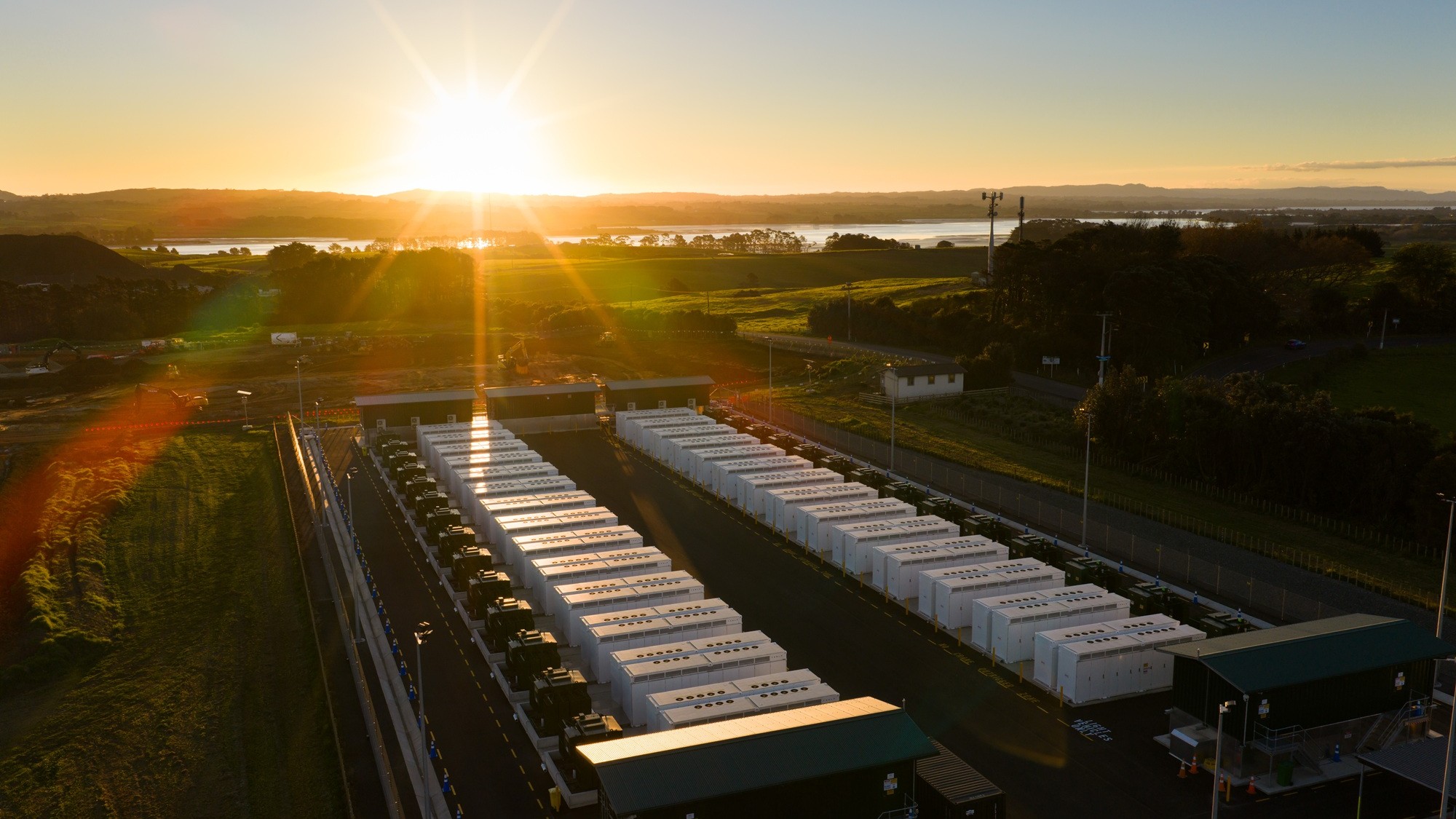
Contact Energy's first grid-scale battery began trading on 1 April, less than two years after construction started in July 2024.
The first stage of the Glenbrook Ohurua Battery can deliver 100 megawatts of power and store around 200 megawatt-hours of electricity, providing enough energy to supply the equivalent of 44,000 homes for up to two hours.
Contact says the $153 million project at New Zealand Steel's Glenbrook site was delivered on time and under budget.
The facility - one of New Zealand's first utility-scale battery energy storage systems - is part of Contact's $1.9 billion investment in energy infrastructure over the past five years.
Contact says the battery reduces reliance on higher-cost thermal generation and improves utilisation of renewable generation across its portfolio.
"As we move on to our Contact31 strategy, our portfolio is now 98 per cent renewable, and flexibility is the next frontier as we lead New Zealand's renewable energy future," it says.
Flexibility role
Contact, a finalist in this year's Energy Excellence Awards, says the facility is capable of dispatching electricity within 0.2 seconds, allowing it to respond to peak demand periods, planned outages and unexpected system events.
The battery's primary role is to provide system flexibility by storing electricity when largely renewable generation is abundant and releasing it when demand is high. The asset also supports frequency management, reserves and other grid stability services.
A key feature was the development of Contact's in-house battery management platform, known as BatMan, which enables the battery to operate as an integrated asset within the company's generation and trading portfolio.
The system was developed by Contact's trading and technology teams to manage charging, discharging and participation in New Zealand's five-minute electricity market.
The battery is "bidirectional and fast", able to respond to price signals, forecast divergence and rapid changes in system conditions.
Contact can configure it day-to-day to support portfolio optimisation and earnings, which delivers improved ability to respond to short-term price volatility, enhanced management of peak demand periods, greater optionality when actual demand diverges from forecast, and reduced reliance on higher-cost thermal generation during periods of high electricity system demand.
The firm says the battery complements its hydro and geothermal assets, improving overall resilience and efficiency.
"While performance metrics will continue to mature, the asset is already embedded in our day-to-day operational and trading decision-making."
Construction
The battery comprises 56 Tesla Megapack 2 XL units connected to the national grid through Transpower's Glenbrook switchyard.
Leasing the heavy industry-zoned industrial site from NZ Steel reduced early complexity in the project, avoiding the need for a greenfield development and allowing consent to progress more efficiently.
It also meant Contact could take advantage of the existing grid connection point, reducing connection costs while creating a platform for future expansion.
Construction progressed smoothly through staged civil works, electrical installation and commissioning. It involved approximately 146,000 work hours, a peak workforce of 70 people and four primary contractors.
Contact reported zero notifiable safety events during construction and recorded 429 safety observations.
The project also involved environmental initiatives, including planting about 1000 native trees in partnership with Te Whāngai Trust and Awhitu Landcare. The project team has also supported the local Glenbrook Primary School with a fundraiser.
Commissioning
During commissioning, Contact completed Transpower grid compliance and performance testing within 12 working days. The battery recorded a benchmark maximum energy capacity of 223MWh, exceeding its guaranteed capacity of 200MWh.
The firm says the commissioning and compliance testing began with proactive preparatory testing completed using Tesla's "novel CHIL benchmarking simulation system - a first in relation to grid commissioning".
Transpower, which also attended those tests, was impressed, Contact says.
The Transpower Electricity Industry Code of Participation grid commissioning tests followed a staged ramp-up approach, starting with one pair of Megapacks and scaling to full-system testing with Tesla to demonstrate 100MW charge and 100MW export.
Contact says that, as expected for a first-of-type integration programme, some "late-stage dependencies" created pressure for the teams getting everything lined up to "work from day one".
The teams were able to mitigate some technical issues during the setup of the market-trading system, and Contact is adding additional weatherproofing to transformer units after a component seal failure was identified.
Capability lift
The firm says the project materially lifted its capability to design, deliver, commission and operate grid-scale storage and developed a strong foundation in the technology within its teams and local people.
"We established repeatable construction and commissioning approaches for large battery projects, embedded robust safety and emergency response practices and strengthened integration across our renewable growth, generation, trading and technology teams."
Early site works have begun on the $235 million, 200MW/400MWh second stage, which is expected to supply enough energy to power 88,000 homes for up to two hours.
The annual Energy Excellence Awards will be held in Wellington tonight. The Energy Project of the Year award is sponsored by China Construction Bank (New Zealand).