
AWARDS FINALIST: Channel Infrastructure NZ – Accelerated diesel storage for New Zealand
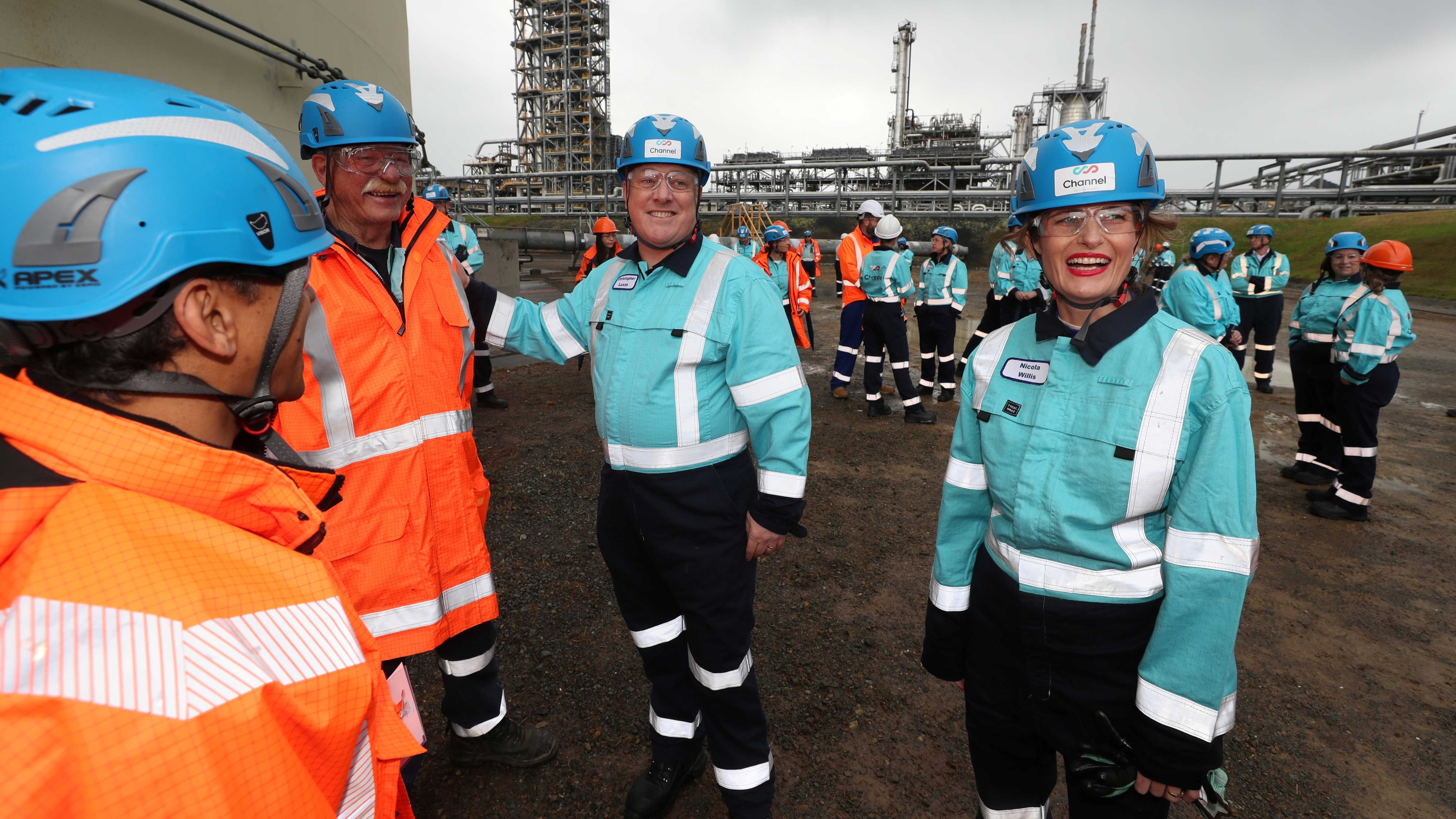
Channel Infrastructure responded to the global fuel crisis by rapidly recommissioning two tanks at Marsden Point to increase New Zealand's diesel storage capacity.
The project saw 93 million litres of additional diesel storage online at Marsden Point in just three months, increasing in-country diesel storage by about nine days of average demand and lifting storage coverage by more than 40 per cent relative to the Government's 21-day Minimum Stockholding Obligation.
Channel developed the initiative amid pressure on global fuel supply chains associated with the ongoing Middle East conflict.
The team came up with a "unique and expedient solution to provide additional bulk diesel storage at scale" to strengthen New Zealand's fuel resilience given diesel's role in transport, food production, emergency services and other critical infrastructure.
The project centred on two previously decommissioned storage tanks used for crude oil and naphtha at Marsden Point - Tank T07, with a capacity of 13 million litres, and Tank T13, with a capacity of 80 million litres.
Channel says a project of this scale would typically require 18 to 24 months to complete.
However, this was compressed into about two months by adopting agile engineering principles - "a methodology more commonly associated with software development than heavy industrial construction".
It ran seven workstreams simultaneously, sourcing available materials first and designing around them, and mobilising contractors and suppliers from across New Zealand.
"Rather than completing design before commencing procurement (as conventional project management dictates), Channel inverted the sequence: source materials first, then design around what is available and when."
Recommissioning innovation
Channel, a finalist in this year's Energy Excellence Awards, says the work included replacing 775 metres of large-bore piping, connecting new infrastructure across three road crossings, constructing a new pumping skid, and cleaning and refurbishing both tanks.
Both tanks had been cleaned at decommissioning but still had contamination risks for clean product.
Secondary risks included water contamination of stored product "given the floating roof design and tank de-watering requirements", the piping integrity across three road crossings, and the standard lead times for new high-capacity pumps being "incompatible with the programme".
The firm notes that inclement weather was also a risk for field welding activities.
Tank T13, measuring 76 metres in diameter, required the removal, cleaning and reinstallation of 116 floating roof support legs to reduce contamination risks from its previous crude oil service.
To accelerate cleaning, it used four ultra-high-pressure water-blasting robots inside T13, while additional industrial water jetting was used on the half-acre tank floor and floating roof.
Channel also replaced existing linework rather than attempting to clean it, citing concerns that cleaning could not reliably meet diesel-quality specifications within the available timeframe.
Procurement, commercial arrangement
The project relied on material and equipment from around the country and overseas.
Channel says its teams "scoured New Zealand" for large-bore pipe stock, with "suppliers dispatching product from as far away as Dunedin".
The resulting inventory then defined the engineering envelope, it says.
Specialist components were airfreighted from Adelaide and Singapore to avoid international shipping delays, and an existing onsite pump was repurposed rather than the firm facing a wait for new equipment.
The project was made possible by a Crown commitment of up to $21.6 million from the Regional Infrastructure Fund to lease the storage capacity for 18 months.
Channel funded the capital works and is receiving storage fees of $1.2 million per month through to 31 December 2027.
The inclusion of a full cost-reimbursement clause if the Government elected not to proceed protected the firm from abortive expenditure risk, and allowed Channel to confidently commence works without carrying open-ended financial exposure.
Channel says the project was delivered without any safety incidents, despite operating on a major hazard facility site and maintaining construction activity up to seven days per week.
Emergency fuel storage mobilisation is uncommon internationally, it says, and typically involves pre-positioned floating storage assets rather than rapid recommissioning of onshore tank infrastructure.
"This project significantly differentiates Channel by demonstrating its unique capability as custodian of New Zealand's most strategically significant fuel infrastructure assets, and its ability to rapidly convert utilised capacity into operational storage in service of national interest," Channel says.
The annual Energy Excellence Awards will be held in Wellington tomorrow. The Energy Project of the Year Award is sponsored by CCB.