
AWARDS FINALIST: Fonterra Co-operative – Project Kowhai – Small footprint with a big impact
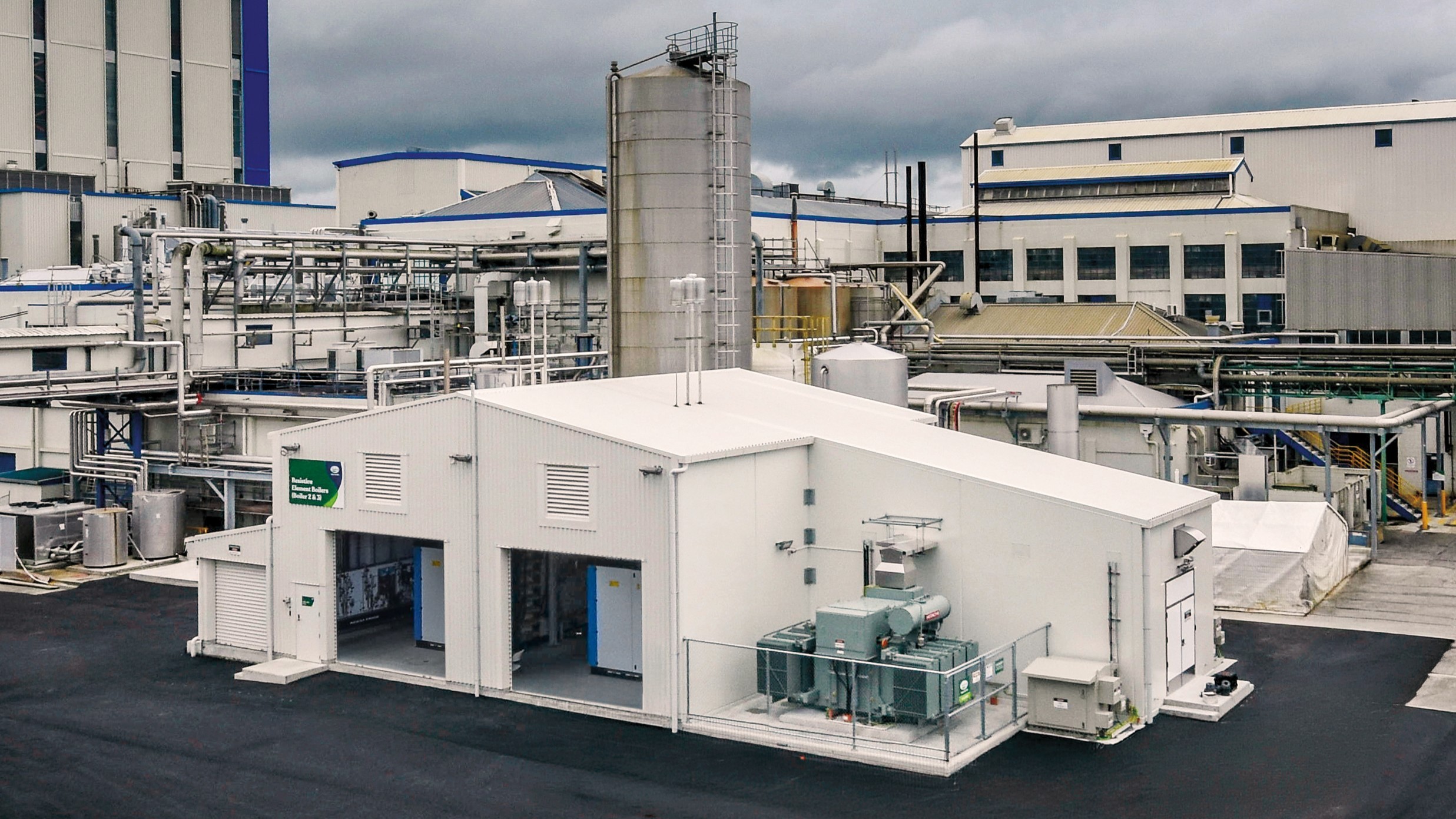
Fonterra achieved coal-free manufacturing in the North Island through Project Kowhai, which installed resistive element boilers at its Waitoa facility.
The nation's largest dairy co-operative installed two 4-megawatt boilers to provide the renewable process heat capacity needed to switch off the site's last coal boiler.
The project is forecast to reduce emissions by 9200 tonnes of carbon dioxide-equivalent a year, eliminate the need for diesel boilers and establish a scalable pathway for future decarbonisation.
Waitoa produces nutritional milk powders for infants, plus ultra-high temperature milk and cream. Fonterra had already reduced coal use there with a 30MW biomass boiler, but one coal boiler remained in operation.
The project was approved with a $17.6 million budget and was eligible for $7.35 million in funding support through Fonterra's partnership with the Energy Efficiency and Conservation Authority.
Delivered with Energy Plant Solutions within a year of investment approval, Project Kowhai has established a model for future decarbonisation projects as Fonterra works to remove coal from its remaining South Island manufacturing sites.
The project was Fonterra's first use of resistive element boiler technology. Fonterra described the system as compact, modular and replicable at other sites.
It supports the co-op's targets to reach net-zero emissions by 2050, reduce Scope 1 and 2 emissions by 50.4 per cent by 2030 from a 2018 baseline, and eliminate coal use by 2037.
Coal transition
Fonterra has traditionally been one of New Zealand's three largest coal users, and is in the process of transitioning to electric and wood biomass solutions.
In 2017, it began assessing how to transition its three North Island coal-using sites - Te Awamutu, Waitoa and Hautapu - to lower-emission energy sources. This included converting Te Awamutu to wood pellets in 2020, commissioning a 30MW wood biomass boiler at Waitoa in 2023, and converting two Hautapu coal boilers to wood pellets in 2024.
The primary driver of Project Kowhai was to improve process heat capacity for peak operations without coal. Secondary drivers were eliminating diesel-fired boilers during winter operations and providing low-carbon energy for future ultra-high temperature production.
The Energy Plant Solutions REBs are unattended, low-maintenance boilers requiring minimal operator intervention across the dairy season, helping maximise production.
The investment included an innovative water-chemistry monitoring and dosing system that removed daily boiler-water testing by automatically adjusting dosing rates to minimise chemical use while maintaining plant longevity.
Developed by Fonterra and Energy Plant Solutions, it was also the first organics-approved water-chemistry programme on an REB.
Delivery
At Waitoa, this supported end-to-end delivery within 12 months and aligned with Fonterra's broader focus on renewable energy, energy-efficient technologies and operational resilience.
By designing and fabricating locally, Fonterra and Energy Plant Solutions could tailor the system to dairy-processing requirements while delivering quickly.
The project reduced uncertainty around renewable heat by validating REB technology in a dairy-processing context, improving confidence in performance, reliability, operating requirements, and integration with existing plant operations.
With the REBs installed, Waitoa now has greater operational flexibility through multiple sustainable process-heat sources. Operating the REBs alongside the biomass boiler helps optimise energy costs and improve resilience for manufacturing operations.
Project Kowhai has increased UHT capacity, strengthened operational security, and established a scalable model for future energy investments.
It also strengthened internal capability to assess, specify and implement similar technologies, including techno-economic evaluation, risk identification, commissioning and operations planning, and future capital decision-making.
Lessons
The project demonstrated how to maintain renewable process heat while responding to product-mix shifts and variable thermal demand, reducing exposure to fossil-fuel volatility while preserving production flexibility.
Key lessons were that REBs can provide reliable process heat when integrated with site utilities and controls, with performance improving as operating parameters and control strategies are refined.
The project also showed strong potential for largely unattended operation through fit-for-purpose automation, alarms and remote monitoring.
A further insight was the value of a relocatable, flexible design; modularity and a compact footprint can speed deployment and allow the solution to be repositioned or reconfigured as site needs, capacity or product mix changes.
The absence of fuel-handling infrastructure - delivery, storage, conveying, and ash management - also simplified operations, by reducing logistics, maintenance, safety, housekeeping and day-to-day operating requirements compared with solid-fuel alternatives.
The annual Energy Excellence Awards will be held in Wellington on Wednesday. The Low Carbon Future Award is sponsored by TechnologyOne.