
AWARDS FINALIST: Contact Energy – Attracting early careers to lead New Zealand’s renewable energy future
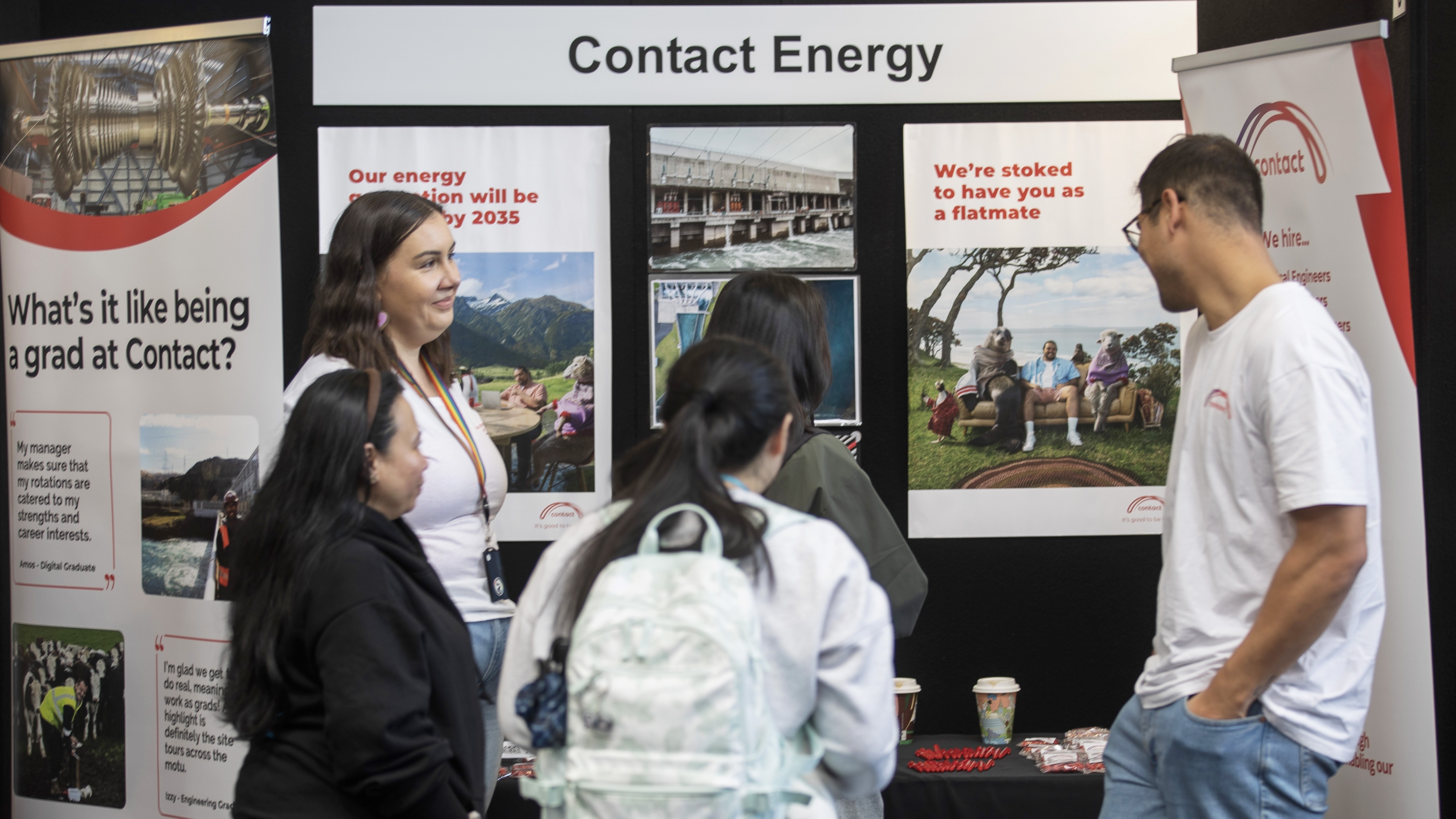
A revamped early-career recruitment and development strategy is helping Contact Energy avoid what it says was a material workforce risk.
In 2023, key areas like generation and trading had ageing staff, were highly dominated by men and lacked Māori and Pasifika representation.
More than a fifth of the people working in these areas were over the age of 60, 80 per cent were men, and fewer than 6 per cent were Māori or Pasifika.
"Traditional, reactive recruitment models were no longer fit-for-purpose, and Contact's employer brand had limited visibility with students and early-career professionals," the firm says.
"With rising competition for talent, growing skills shortages and a constrained domestic pipeline, action was needed."
The company responded by appointing a dedicated early-careers lead and creating a workforce development programme spanning graduate, internship, and apprenticeship pathways.
"Rather than treating early careers as a single recruitment event, the strategy reframed it as a long-term workforce development pipeline," the firm says.
The graduate programme was structured as an 18-month rotational scheme, while internships and apprenticeships were expanded to provide practical industry experience and recognised training. The strategy was designed with input from senior leaders, hiring managers, graduates, students, universities, and external recruitment partners.
The programme focuses on increasing participation among women, Māori, and Pasifika candidates, while improving candidate retention and engagement throughout recruitment.
Results
Contact describes the results as outstanding, with female representation in graduate cohorts up from 30 per cent in 2023 to 55 per cent in 2024, 67 per cent in 2025 and 87 per cent in 2026.
In 2025, Māori and Pasifika candidates accounted for 25 per cent of accepted graduate offers, meeting a target set under the strategy.
Applications from Māori and Pasifika candidates increased by more than 1000 per cent compared to 2023 levels.
The company also reported a 96 per cent candidate retention rate through the recruitment process, a time-to-hire of 31 days and a 91.5 per cent retention rate for Māori and Pasifika candidates during recruitment.
Contact also launched a dedicated early-careers website, introduced year-round engagement with students through newsletters, expanded university outreach and partnered with organisations including the Women in Engineering Network and Māori and Pasifika studying STEM subjects (science, technology, engineering and mathematics).
Candidates rated the recruitment experience 4.8 out of 5, the firm says.
Traffic to its Prosple graduate-employer profile increased 354 per cent year-on-year, while the company ranked first in the Energy & Utilities category and second overall in the Prosple Top 100 New Zealand Graduate Employers rankings in both 2024 and 2025.
The strategy also included partnerships aimed at broadening participation in energy careers. Contact's First Foundation partnership is now in its third year and provides scholarships, mentoring and wellbeing support for students from lower socio-economic backgrounds.
The company has also run Māori internship programmes with iwi partners in Taupō and Clyde. Over the past three summers, 12 rangatahi have participated, with one securing ongoing employment in Contact's reservoir operations team.
Contact says the programme will continue to evolve, with future priorities including expanding Māori and Pasifika talent pathways, strengthening manager capability, and improving tracking of long-term career outcomes for early-career hires.
The annual Energy Excellence Awards will be held in Wellington on 19 August. The Futureforce Award is sponsored by Ngākau Hihiko.