
AWARDS FINALIST: The Orion Group – Tautoru Mautai – a partnership to restore the whenua
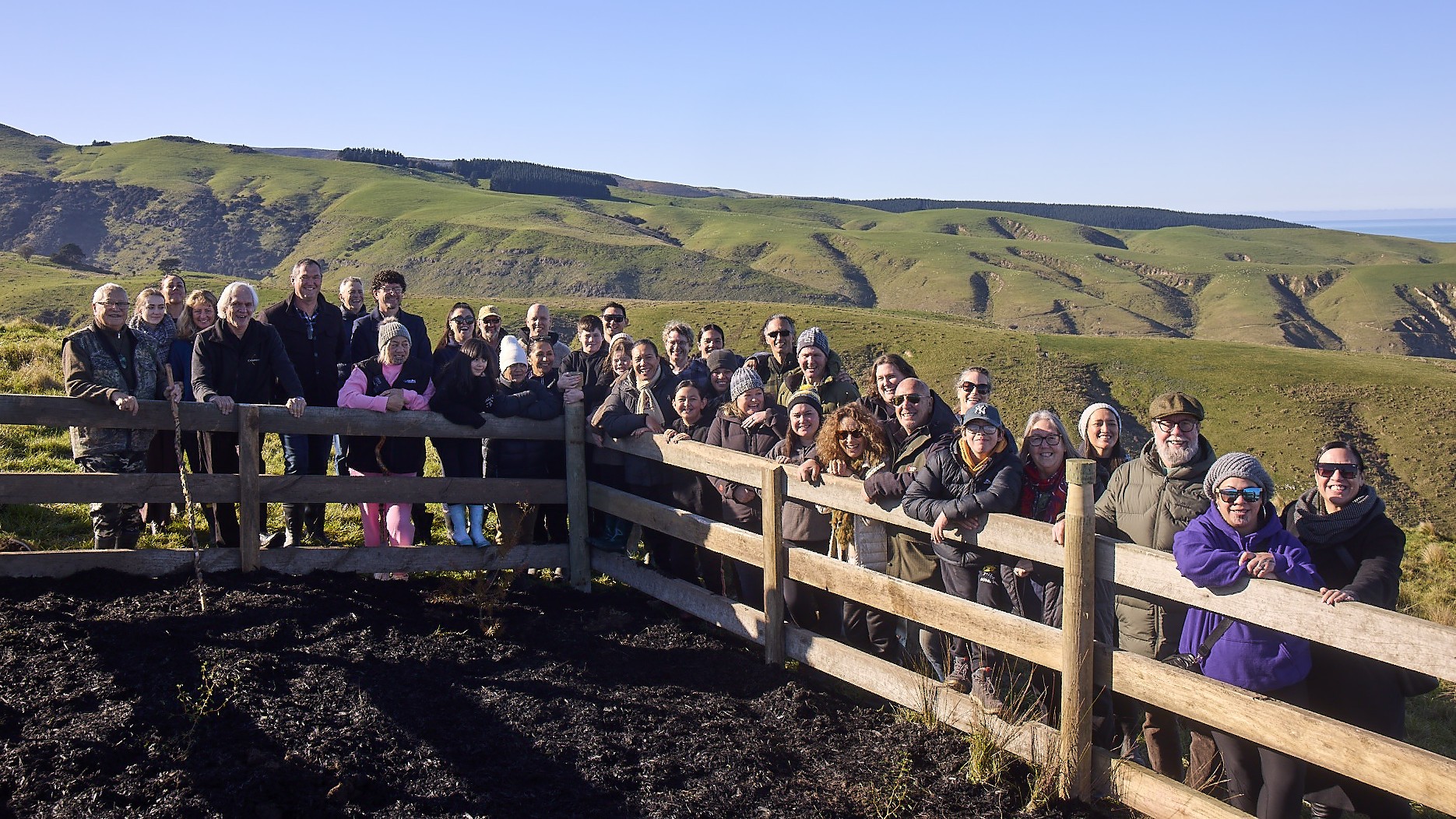
The Orion Group is earning both revenue and plaudits for a major ecological restoration project on degraded former farmland on Banks Peninsula.
The revenue comes in the form of carbon credits generated under the emissions trading scheme - 652 New Zealand Units so far, worth more than $30,000 on today's market.
The credits recognise the fact that a regenerating forest increases the country's carbon storage - each NZU recognises a tonne of carbon dioxide removed from the atmosphere.
Both Orion and project partner Wairewa Rūnanga have registered as participants in the ETS, providing a revenue stream for both.
Orion's 53 per cent share of the 1239 credits generated so far is helping the Canterbury distributor reach its carbon reduction goals.
The firm (including subsidiary Connetics) is currently operationally carbon-neutral on scope one (direct) and scope two emissions (from 'imported' energy, excluding transmission) and is working on scope three (indirect emissions, both upstream and downstream from the company's operations).
Forests
The 35-year Tautoru Mautai project is a joint venture between Orion and Wairewa Rūnanga centred on a 440-hectare block of the rūnanga's land near Little River on Banks Peninsula.
In 2020, Orion was looking for a way to offset its greenhouse gas emissions in order to meet the 2030 carbon-neutral target set by its board.
The firm's sustainability manager, Pip Newland, and commercial lead Stephen Godfrey put together a business case that included using native forest as offsets.
In 2021, project manager Clayton Wallwork approached Wairewa Rūnanga, a body established as part of the Ngāi Tahu settlement to manage the collective assets of the people of southern Te Pātaka o Rākaihautū/Banks Peninsula.
The rūnanga wanted to restore the native forest on farmland returned to it by the son of a farmer who'd been given it for service in the Boer War.
Together, the rūnanga and Orion embarked on a restoration effort that has seen the planting of more than 200,000 native seedlings and the destruction of more than 1100 pests, including possums, rabbits, hare, rats, stoats, deer and wild cats.
Wallwork says even he doubted it could be done.
"I don't think people thought we could plant at this scale," he says. "Back in 2021, when we were kicking off, I had outsiders to the project telling me 'you'll never do it, it hasn't been done before, it's not achievable'. I was questioning myself; it certainly sowed some doubts, but having a look at smaller-scale but comparable projects by the council and others, deep down I knew this could work."
Employment, community
Working with mana whenua means the project has gone much wider than environmental sustainability, supporting local employment and helping the rūnanga achieve its goals.
Rūnanga chair Matiu Prebble says the project shows a deep commitment and understanding of the need for a shared vision for long-term ecological rejuvenation.
"The Orion Group have set, like pounamu, an exceptional standard for energy companies in supporting and delivering on kaupapa, not only of importance to mana whenua but that also encapsulate the need to sustain enduring relationships," he says in a letter of support for Orion's Energy Excellence Awards entry.
As the largest indigenous forest replanting programme on southern Te Pātaka o Rākaihautū/Banks Peninsula, it is inspiring further projects, he says.
"It is also now seeing revenue returns on investment for both partners, showing that the emissions trading scheme can provide incentives for development of similar initiatives."
Benchmark
Christchurch City Council senior ecologist Nicholas Head is also full of praise for the project, describing it as an outstanding example of the way in which the energy sector and mana whenua can work together to deliver genuine, large-scale forest restoration.
"As a senior ecologist with a long involvement in ecological restoration, I consider this project to be a benchmark example of restoration done well," he says in his supporting letter.
"The scale and commitment of this recloaking project, combined with its ecologically authentic methodology, makes it a fine example of restoration done well.
"This partnership stands as a model for future collaboration between infrastructure providers, mana whenua and local communities. It shows what is possible when restoration is grounded in trust, shared purpose and a genuine respect for natural ecosystems."
The annual Energy Excellence Awards will be held in Wellington on 19 August. The Community Initiative of the Year Award is sponsored by Eagle Technology.