
AWARDS FINALIST: SUPA Energy – SUPA: Distributed power, private capital, community wins
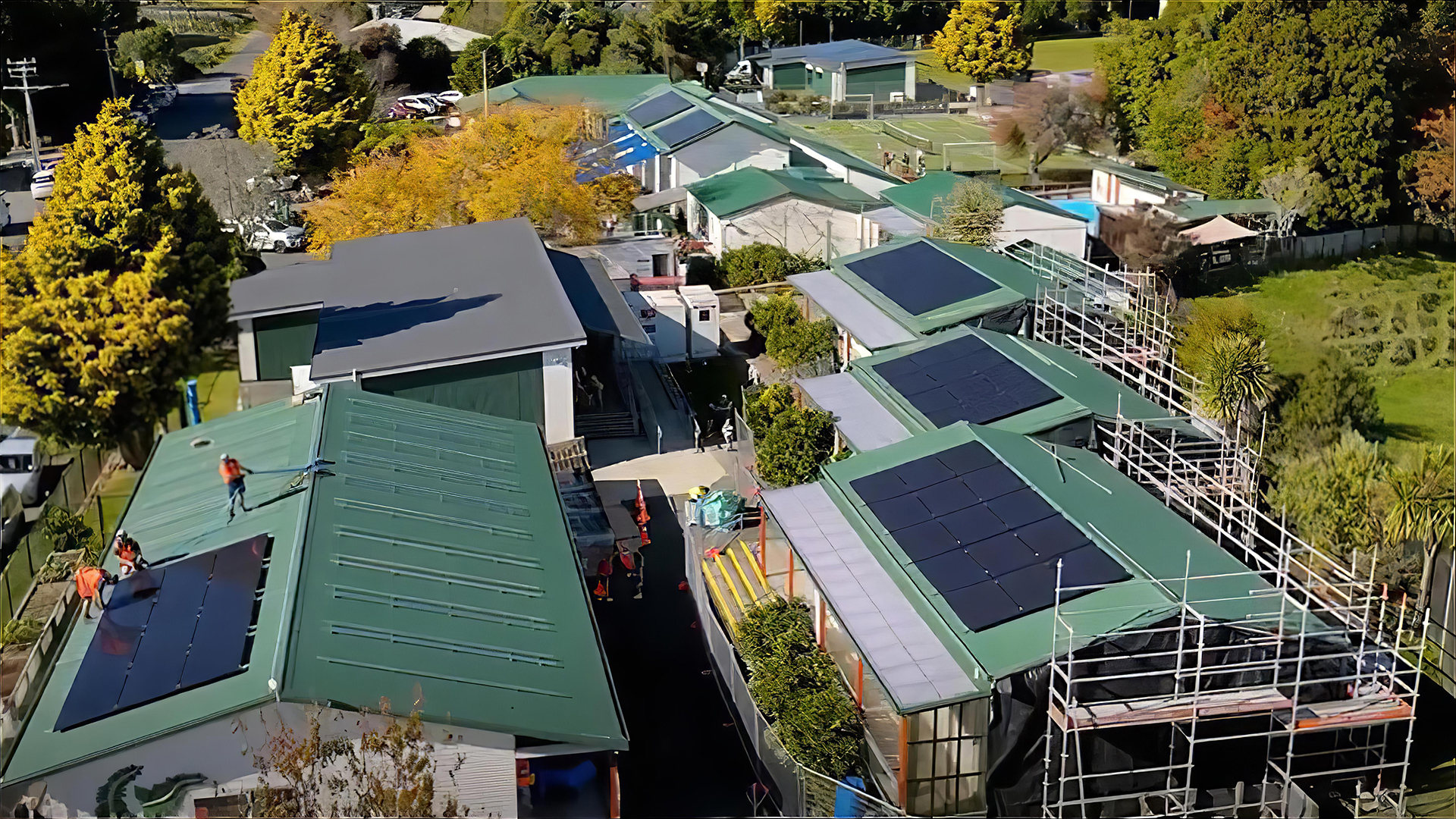
SUPA Energy's "multi-objective dispatch" strategy across its growing network of solar and battery community generation hubs is earning cash returns for the schools, clubs, farms, marae, and businesses that host them.
The firm has so far commissioned about 4 megawatts of commercial-scale solar and 3 MW of batteries. Its proprietary artificial intelligence technology, developed by chief technology officer Nick Buttar, means it can access and share a value stack normally broken into four separate companies - an electricity retailer, asset operator, software company, and a community partner.
"We do it in one," chief executive Luke Blincoe says.
"That integrated posture is the innovation."
SUPA is a finalist in the innovation category of this year's New Zealand Energy Excellence Awards.
It has distributed assets at commercial scale, on community hub sites nationwide. Its software enables them to act in concert with the wider grid and benefits groups who currently cannot afford to participate in the energy transition.
While most distributed solar is designed to maximise the host's economic outcome and externalise the costs onto the network, SUPA's view is that distributors should price cost-reflectively, and "we should respond."
Its batteries enable the firm to respond to any published dynamic pricing or operating envelopes and can be an "ally rather than a problem" for distributors to manage.
Batteries also allow the generation hubs to avoid emerging grid curtailment risks as well as low daytime returns on solar generation. Cheap midday solar can be stored then dispatched into the evening peak when prices are higher.
Value stacking
Last year SUPA raised $4 million of private capital and also secured a repayable $500,000 grant from the Ara Ake National Flex Discovery Fund to finance its growth.
The Auckland-based firm has commissioned more than 22 sites nationally and has another 44 under construction, generating about 4000 MWh per year.
It sells its solar generation at market-leading rates to local communities, with its proprietary machine-learning technology predicting the half-hourly spot market and orchestrating battery dispatch and charging across the hubs.
SUPA says that integrated stack means its hubs earn more revenue, displace more carbon and create less network stress than the same generation from unmanaged rooftop systems.
In February it gained support from the Electricity Authority's Power Innovation Pathway to further develop this combined service approach with the country's electricity distributors.
"The technical work to integrate with multiple networks, each with their own data formats, policies and connection rules, is non-trivial," Blincoe says.
Coordinated approach
SUPA's technical innovation is the proprietary machine learning stack that turns separate hub sites into a single coordinated energy resource. They respond to spot prices to maximise revenue, while honouring SUPA's commitments to lines companies to discharge during specific peak windows or absorb during specific surplus-solar windows.
The technology also ensures it is meeting retail customers' expectations of a cheap, reliable supply, and preserving outage battery backup for the host site.
"A naive dispatch logic would do one of these things well and the others badly," Blincoe says.
"SUPA's optimiser solves for all four, every half-hour, across every site in the fleet."
Its half-hourly spot market prediction is shaped by hydro inflows, demand curves, transmission constraints and the dispatch of fossil-fuel peakers. It has been tuned on multiple years of wholesale market data and is continuously updated.
"The more sites in the network, the more value the optimisation captures, both for hosts and for the wider grid," Blincoe says.
"Predicting where the spot price is going in the next interval, the next day and the next week is hard. Most retailers buy hedges on a set and forget basis."
Community benefits
SUPA's model is also helping community groups. Blincoe says schools, clubs and community organisations are ideal sites for solar and batteries, but they face challenges around the high capital cost, long payback, intimidating technical due diligence and asset risk.
As a result, most either do not install solar or they buy a small system that does not scale. As a result, sites that should be the "natural backbone" of distributed energy stay disconnected from it.
SUPA helps arrange the finance and installation of commercial-scale solar and batteries with the host owning the asset throughout.
The firm covers the loan repayments out of the broader system revenues: power sales to community customers, wholesale arbitrage from peak shifting and network and flexibility payments where applicable.
The host carries no commercial risk and receives a monthly cash return plus reduced energy bills and battery backup.
In return, SUPA gains a portfolio of high-quality, community-supported sites at attractive scale which its optimisation stack uses to create more value than any individual host could.
"None of that money is leaving the community, let alone the country."
The annual Energy Excellence Awards will be held in Wellington on 19 August. The Innovation in Energy Award is sponsored by Fujitsu.